Core vocabulary in language representation and processing
Abstract
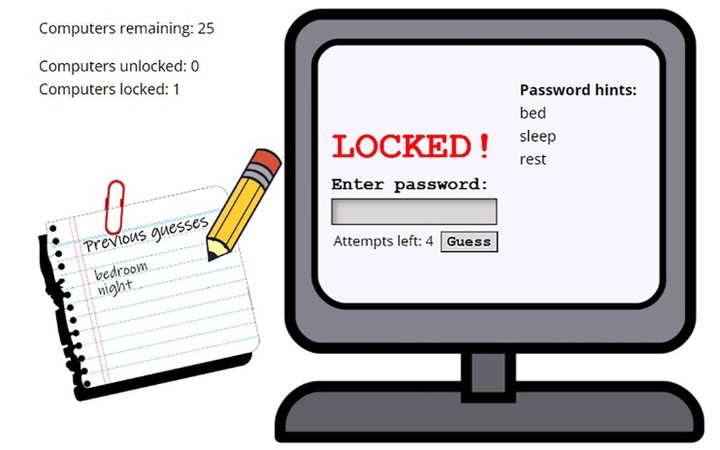
The question of which words are most important or fundamental to a language has been explored in many ways. However, many of these approaches place little emphasis on how humans learn, represent, and process language from a psychological perspective. In this study, we define and compare three distinct psycholinguistic measures of core vocabulary – word frequency, age-of-acquisition, and centrality in semantic networks – and test how well these core words capture human performance in a word-guessing game. In two experiments, 1000 participants were given different core words as both hint and target words, with the aim of identifying the target as quickly as possible. We found that while core words in general did not make very effective hints, they were effectively guessed as targets when using hints beyond the sets core words, and furthermore, were better guessed when the core word targets were defined based on centrality in semantic networks rather than linguistic factors like frequency. This finding was consistent across a range of experimental conditions and analyses. We discuss the implications of these findings for representation and processing in semantic memory, and what factors should constitute a human core vocabulary.